

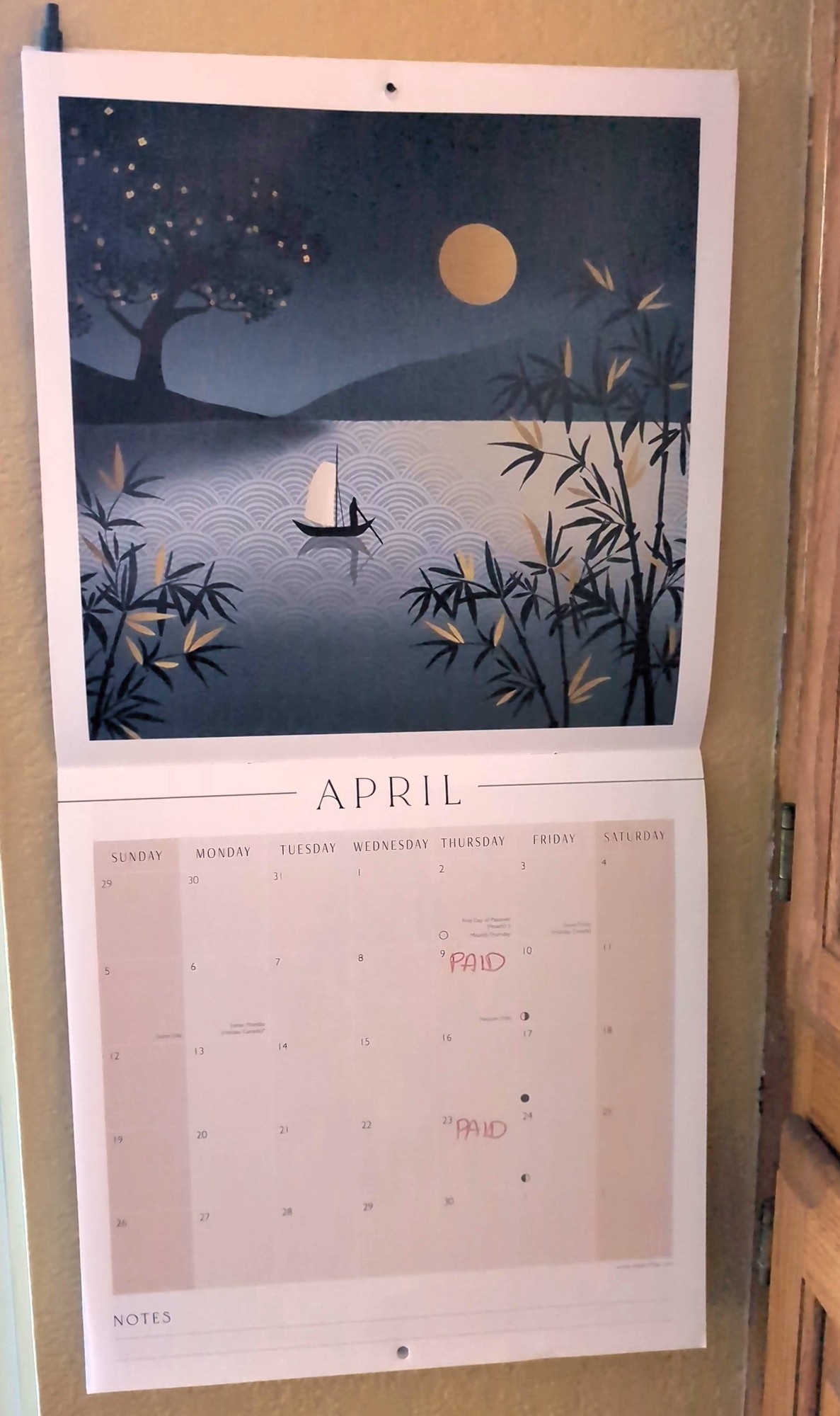
Core Architecture
My calendar app is a static, multi-page application with a fixed release cycle (annual deployment). It features a hard-coded UI with immutable data — the dates and layout cannot be modified without manual intervention. It’s essentially a read-only interface optimized for offline-first functionality.
Key Features
Data Structure - 12-month dataset rendered as a grid-based layout with pre-populated date objects
State Management - Completely stateless; no persistent storage or sync capabilities
User Interaction - Supports reads and writes; compatible with any pen/pencil (similar to a POST request, but non-reversible)
Rendering - Raster-based output; responsive design (fits on my wall)
Accessibility - Physical accessibility for all members of my cohort
Portability - Take a picture once a month, refer to that on your phone
Performance - O(1) lookup time for any date; zero latency, zero network overhead
Technical Advantages
Zero dependencies, requires only wall space and a pen.
No API to support / learn, no loading times / lag, no version conflicts.
Guaranteed uptime. It’s also compliant with most privacy standards, though it does require physical access.
Limitations
The calendar has no real-time sync, no cross-device functionality, and no undo. Annotations are permanent with an ink pen. It cannot adjust for time zones or integrate with other calendar systems. No ICS compatible export of appointment data. And unfortunately, the application will need to be replaced after just one year.
If you’re interested in implementing a similar app, I can point you in the right direction…
I like the size of the display