

You must log in or register to comment.
Weeks start on Mondays
This. Sunday is part of the weekend, not the weekstart.
But there’s no such thing as the word “weekstart.” Weekends are split in half. Saturday is the end of the week and Sunday is the beginning of the week. I am from USA and this has always been my understanding.
You gotta choose, either weekend = Saturday or weekend = Saturday + Sunday.
If your case is the 1st just say have a nice Saturday and Sunday. If you say have a nice weekEND for both days, Sunday is the last day of the week.
Sunday is on one end and Saturday is at the other.
So your week doesn’t start ever. Only ends. How? Lets call 1st of January end of the year then.
Ffs…
Look up the definition of the word end. Stop thinking of it as THE end and street thinking of it as AN end. A length of string has two ends correct? A stick has two ends, correct? Here’s a picture of my calendar at home. Note that Sunday is at one end and Saturday is at the other end.

According to your photo, Sunday is the 1st day of the week. You can call it an end, but it is the day that your week begins.
So combined it’s the weekends?
Like bookends!
Yes, we had the “bookends” discussion down here.
deleted by creator
Depends, mine starts on Monday. I also live in SI and ISO. My wife’s starts on Sunday, she goes to church. Although I still don’t get that as the seventh day was a rest day.
It does sometimes make talking about Sunday next week confusing.
8601 represent
Because sabbath was the seventh day, the rest day. It predates Christianity. It’s like the very first book of the Old Testament…
What day was the Christian day of rest & worship day again?
Was my understanding as well. Last day of the week is for rest, which Christians do on a Sunday. Funny that a lot of Christian countries still use Sabbath as last day of the week.
deleted by creator
We do
Practically everyone should know SI, or have at least heard of it before. It’s the standard system of measurement used in most of the world. It includes base units for time (seconds), distance (meters), mass (kilograms), electric current (amps), temperature (Kelvin), amount of a substance (mole) and intensity of light (candela), plus a bunch of units derived from these.
It’s practically only the USA that doesn’t use some of three units (for example, preferring feet over meters)
ISO is a standards body. They define a bunch of standards. One of the more well-known ones is ISO 8601, which defines standards for dates and times. It specifies that weeks start on Monday.
You replied to wrong person I think 😉
American self-reporting
I’d thought I’d see less people of the USA on Lemmy but it seems I cannot escape them
There are a lot of us! Especially on English-speaking forums. The US population is close to half of the entire population of Europe.
But there is a trick to almost completely avoid Americans: frequent a forum in any language other than English.
For now, fortunately, it is manageable with the keyword filters to filter out most of US politics, but we’ll see how long that lasts 😃
Says the person posting from a US instance…
deleted by creator
All the different server instances are independently owned and maintained. Lemmy.world for example I believe is located in Germany or Netherlands, which I think is also where a lot of the admin staff are located? Lemmy.zip I think is hosted in the US. Check join-lemmy.org, I think it tells you where all the various instances are located. Or there’s a similar Lemmy stats site that shows it, I don’t recall exactly, which is why I keep saying “I think” as I would need to double check all that info to be sure. But it’s probably pretty close to accurate.
We have our ISO and Americans have their ANSI, everyone has something
Oh lol way to embarrass yourself
deleted by creator
You are one unique being lmao
Man it really feels like some USA circle jerk going on here. I’m gonna be the bigger man here and leave you all to it 😉
Ok big man. No ‘muricans here, only people who have no idea what SI and ISO is and blatantly insults everybody for exposing yourself. Biiiig man energy
What do people that start the week on sunday call the “weekend”? For them only Saturday is the weekend and Sunday is the weekstart or what?
Weekend like bookend, both sides.
Ah yes, Weekends are like bookends. I like your analogy.
If these nonces up there can understand that there’s no such thing as a “bookstart,” they can begin to understand the concept of weekends holding the week together from opposite ends.
It’s the Front end buddy
Σαββατοκύριακο. Saturday and Sunday. It would be far weirder to start the week on Δευτέρα which literally meaning “second”.
Of course in English and other languages Monday does not mean second. Still for Mose western (plus Arabs) Monday has been second after Sunday. Long before Saturday was a day off.
ISO defining the start of the week as Monday due to it being the first business day (lol) has comparatively little impact.
On Friday Americans wish each other a good weekend and weekstart, obv (if they even get both off, which sounds unlikely now I’ve said it).
It depends on the country. While most countries start it in Monday, Sunday is also common, some muslim countries start it on Saturday, and Maldives starts the week on Fridays.
Feb 2027 starts on a Monday, and has 28 days!
According to my workplace, the week starts on Saturday.
You need the metric system to understand that
february 2026 mo tu we th fr sa su 1 2 3 4 5 6 7 8 9 10 11 12 13 14 15 16 17 18 19 20 21 22 23 24 25 26 27 28february 2027 mo tu we th fr sa su 1 2 3 4 5 6 7 8 9 10 11 12 13 14 15 16 17 18 19 20 21 22 23 24 25 26 27 28the true perfect month
I wish this is how we arranged it. Makes so much more sense
Alas, my brain is too used to wed in the middle
I have good news for you. Wednesday in German is Mittwoch=midweek
Yeah, becase it’s in the middle of the week. The weekend is after the end of the week.
Weekends can be like bookends, where you have one on each end.
Exactly, a different one on each end.
feb 2027
nice
I only go by the Linux “cal” command.
right! like, why complicate things?
But my cal starts on Sunday. What are your locale settings?
that means (if your locale is set according to your position), you are probably somewhere in the blue area on this, while I’m in the orange.
https://commons.wikimedia.org/wiki/File:First_Day_of_Week_World_Map.svg
Portugal being different from Spain and the UK managing to have both Monday and Sunday conventions are pretty funny. But I don’t recognize the freaks in Indian ocean who are the only ones to use Friday as the starting day.
Edit: it’s Maldives.
“cal” command.
TIL about
cal. It’s a standard util-linux command! And it follow my locale automatically :0
Motu weth, fr’sa su
Cthulhu awakens
ISO-8601 strikes again. Sunday week start master race rejoice
Monday is the start of the week and I will die on this hill
100%. Saturday and Sunday are the weekend, you know, like the end of the week.
Weekends can be like bookends, where you have one on each end.
Heretic.
Heretic.
ISO-8601 weeks start on Monday.
https://en.wikipedia.org/wiki/ISO_8601
[D] is the weekday number, from 1 through 7, beginning with Monday and ending with Sunday.
Who the hell starts the week with Sunday?
The US people. There went “What does the whole planet start their week on? Really? Well in that case we’ll pick Sunday”.
A bit like what they did for pretty much everything else.
That’s what the country was built on, the right to be as stupid as you want to be.
Including fucking paper.
Standard printing and normal daily usage paper in the US is 5.9 mm wider and 17.6 mm shorter than the A4 paper.
Brazil!
Monday is called “Segunda” wich means “second” and every weekday follows this. So the Nth day of the week is called Nth except weekends
Yeah well, it’s called october but I still think of it as the tenth month 😬
I always think of segunda-feira as the first day of the week, despite the name; though it appears that calendars here start on Sunday (something I’ve never noticed).
While it is the first day of the work week, it makes more sense to think of it as the second day in Portuguese so the naming stays consistent.
deleted by creator
What? no
Monday is called “second” and is the second day of the week. The “last” day of the week sunday, is the first day and has a special, non-ordered name “Domingo”
A lot of us, apparently
of US
I’m not from the US
From middleearth?
Yep, the Shire specifically
Uh, everybody? Mae’s the calendar so much neater seeing it bookended with weekend days on both sides.
heard it’s the British
God did, it’s in the bible.
https://en.wikipedia.org/wiki/ISO_8601
[D] is the weekday number, from 1 through 7, beginning with Monday and ending with Sunday.
I always knew starting the week on Sunday was messed up. Thankfully there’s an ISO to back me up
It also say YYYY-mm-dd should be date and HH:MM:SS should be time and YYYY-mm-ddTHH:MM:SS should be datetime. But it also allow extremely cursed datetime, many prefer rfc3339
I use that date format for saving work docs anyway. And use dd/mm/yyyy for anything else.
Although thinking about it, maybe I should just adopt the international standard for everything
I routinely do this in emails and documents. No one has ever questioned me on it because they’re used to it from folder/file names.
Please do join me in slowly changing the world over to year, month, day order.
(Though I prefer the non-standard dots instead of hyphens, as they are non-line-breaking, and allows for hyphens to be used as separators for other parts in a file along with underscores)
YYYY.MM.DD is my fave
But it also allow extremely cursed datetime
Like what?
The standard specify a ton features and formats. Thing like day if week so 2015-W4-1 would be the first day of the fourth week of 2015.
But the you have can have periods like “P1Y2M10DT2H30M”, and you can specify start and end dates. So if you want to start an event that runs for 3 months, 20 days, and some time you could write it as “20220212T1133/P3M20DT7H15M”.
And then there’s more like giving the year as an exponent, so 2015 can be written as Y-2.015E3S4.
2015 can be written as Y-2.015E3S4
When would this ever be required, wtf hahaha

This could be every month if we adopted a 13 month calendar of 4, 7 day weeks. Works out very cleanly with only 1 extra day per year.
Combined with Holocene calendar and decimal time… hnrggh… one can dream! I actually designed a spreadsheet for exactly this and it works perfectly. Only issue is that it doesn’t auto-update, you need to edit an empty cell of the spreadsheet (doesn’t even need to be saved), for it to update to the current time.
Would be nice to have an installation that lets you use that calendar and time format…
I actually like the 12 or 60 based time! Couldn’t we change to base 12 for everything instead? 🥺
Yeah, I’m a fan of using minutes instead of percentages. For example instead of 33.3̅% you can write :20 or 20’ - like in the old fixed-point arithmetic days!
Time already is that.
The true ideal.
Behold Symmetry454, the TRUE true ideal.
While we’re changing the calendar, can we rename September through December so they’re not off by two?
Septem, Octo, Novem and Decem are the Latin words for 7, 8, 9 and 10 respectively, but they’re actually the 9th, 10th, 11th and 12th months of the year. This is because the Roman calendar was originally only 10 months, but Julius Caesar inserted two new months in the middle, without renaming the last four.
Maybe the oldest tech debt in existence - the calendar was changed in 45 BC.
In Japanese months are named based on the number of the month, literally “first month” to “12th month”, which is the most sensible way to do it
Why not just call February 2026 “month 2 of 2026” and call the 9th of February 2026 “the 9th of month 2 of 2026”
That’s essentially how the Roman calendar was named for six out of the 10 months:
- Martius: (Mars)
- Aprilis: (from aperire, “to open”)
- Maius: (Maia, goddess)
- Junius: (Juno, goddess)
- Quintilis: (Fifth)
- Sextilis: (Sixth)
- September: (Seventh)
- October: (Eighth)
- November: (Ninth)
- December: (Tenth)
But then we’d have to deal with that lousy Smarch weather
People are superstitious and would never allow a 13th month
Worse than that, in order to preserve the date/day-of-week correlation, the extra 1-2 days (you still need leap years) would not have to be part of any week.
So that’s instant opposition from all the Abrahamic religions.
Agreed. It’s so simple and beautiful.
- The once a year extra-day is an international Eat The Rich holiday. Probably tied to the winter solstice.
- And every fourth year we all get a bonus-extra Leap Purge holiday.
The Gregorian calendar has nothing on this!
I like this better than the French revolutionary calendar’s ten-day weeks. Maybe if they had included more than two weekend days people wouldn’t have hated it so much
The best part is that every date (i.e. the 1st, the 22nd, etc) would always fall on the same day of the week, every month.
I don’t get it…
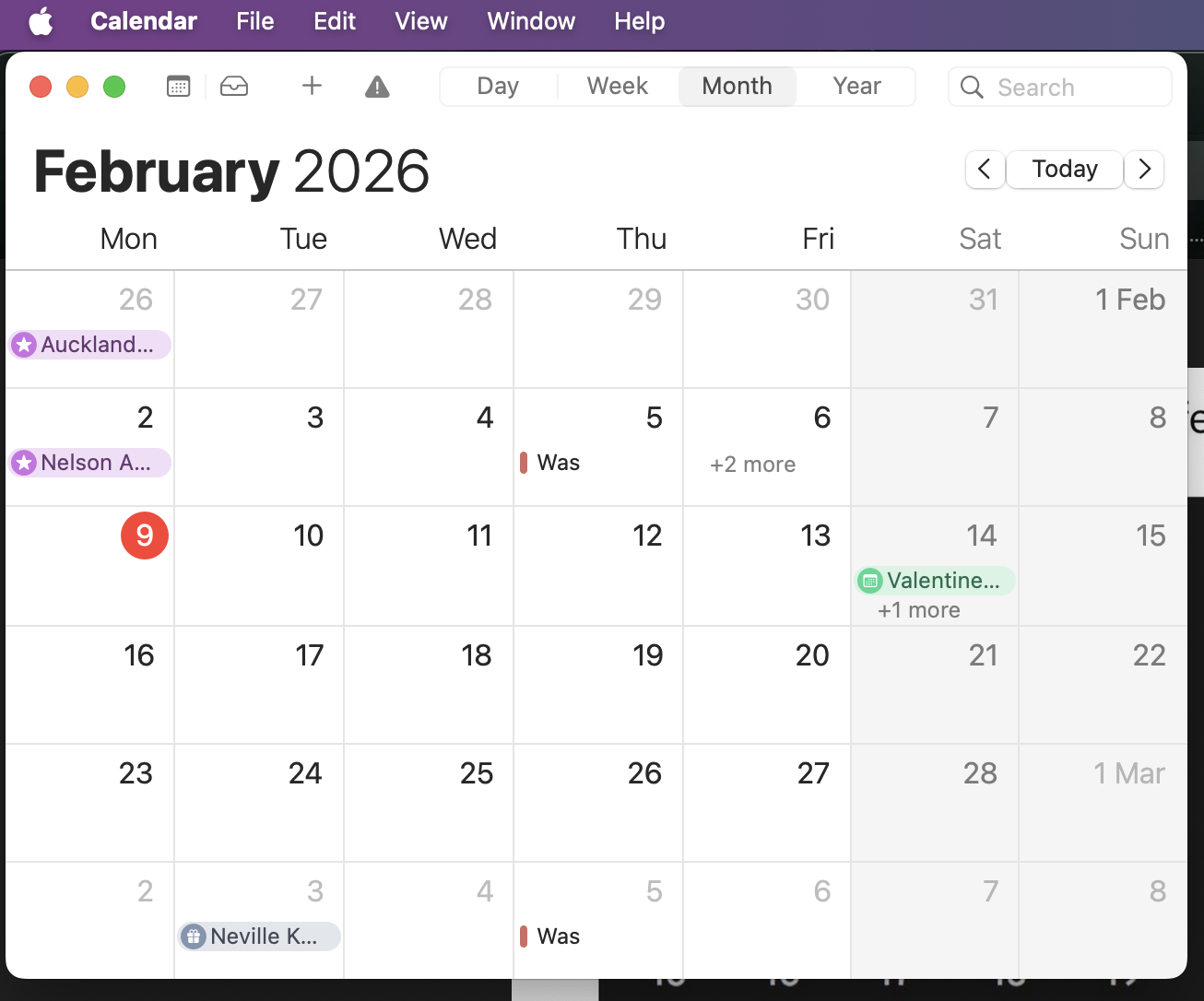
Well, you see your image is different from the other image.
Yes, I can see that. How does the other one work - Do you start the working week on the Sabbath?
Sabbath is on Saturday.
Is the Sabbath Sunday? I thought it was Saturday. But regardless, some countries start the week on Sunday.
It’s cursed as heck when we call Saturday and Sunday the weekend.
Weeks start on Mondays!
Next year for Monday fans.
I grew up with the calendar as shown here. Like bookends on a shelf. The week “ends”.
My wife’s work insists weeks start on Mondays. This allows them to schedule her differently and not get overtime according to their scheduling.
Mine does the same, but insists the week starts on Saturdays.
I don’t know why the world cannot decide a proper schema for this.
this
I live in a blue area but I never agreed that the week starts with Sunday. It’s clearly Monday and I dgaf who says otherwise.
Dispite growing up in the US, I never actually considered Sunday as the first day of the week. I just saw Saturday and Sunday as margins to the actual week days.
This looks so wrong.
This should be always. We could easily have 13 months with an even 28 days, or four weeks, every year. But, you’re going to say, “What about that last day?” That’s new year’s day, it’s once a year, not ever a regular day of the week, and every leap year we get 2 of them and make a weekend of it. Those remainder calendar days don’t need to be a particular day of the week, we can just make them holidays and stop worrying about it. Or we do keep them as regular days of the week and the calendar shifts by a day or two every year. I don’t really care. I just want the months and weeks to be at least a little less chaotic. And if there is going to be a chaotic little remainder weekend every year, it might as well be a party.
Do I have to pay interest on my mortgage for those days?
No, and your rent goes down by an equivalent amount for the 13th month as well.
What I’m going to say is: technology. The calendar will never change because of technology. This would be the most expensive and extensive change in history. Every computer system, program, device everything.
And you have to either retroactively change past dates, or support 2 systems at the same time. It’s almost insurmountable at this point.
I’ve lived through attempts to switch to metric and Y2K. Tech problems are easy compared to changing direction against societal interia.
My FiL gifted me an art calendar from 1998. I was confused at first, then he said the calendar days of 1998 are the same days for 2026. So, that’s a thing we all know now!
There exist only 14 different calendars.
Jan 1= monday, Jan 1 = tuesday, …, Jan 1= sunday, and again the same 7 combinations for leap years.
There is a difference for hollidays like easter that are based on the moon cycle, but just from the days of the week its only 14.
Neat!
1 in 7 chance [if you sample from infinite years]
the first day of the month moves forward one weekday each year except mar-dec on a leap year which moves forward two weekdays
That can’t be correct, can it?
They would have a rotating 7 year schedule, but it’s messed up by leap years. You have the seven calendars you’re thinking of and 1-2 leap year calendars mixed into those 7 years. It would have to be somewhere between 1 in 8 and 1 in 9, wouldn’t it?
I think it’s more like 303/2800 chance.
There are 97 leap days every 400 years, then the calendar repeats. So you have 303/400 chance of not having a leap year, and in those years, you get a 1/7 chance of having this calendar. Thus 303/2800.
This is counterintuitive to me, because 303/2800 is .108, which is between 1/9 and 1/10. But 97 out of 400 is less than 1 out of 4, so it shouldn’t be able to interfere more than twice in a 7 year cycle, on average. But your math looks correct. I must be missing something.
No, since there’s only 7 different possibilities, then over a sufficiently large sample, the probabilities would all still balance out to 1 in 7.
There’s 14 different possibilities because of leap years.
Oh yeah, you’re right. I was focusing on just where the first day of the week lands, not the full month calendar.
February starting on a Sunday also means two Friday 13th in a row, except in leap years.
No it’s not, this means there’s two Friday the thirteenths.
I mean that happens twice in the same year sometimes anyway (2024).
But when February does it, it does mean two consecutive ones.
Yeah, but they can’t all be Friday the 13th, unfortunately.
We could have 12 perfect months s year if we switched to a 13 month calendar.
plus one leap day right?
Yah basically.