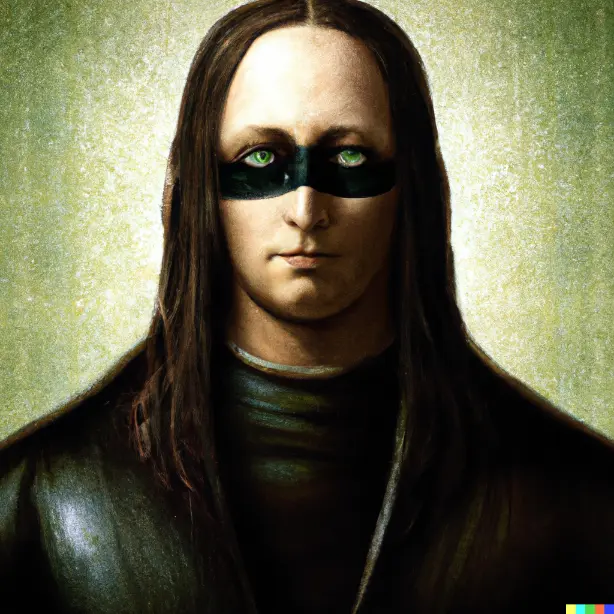
Evelyn woods speed reading book
I don’t think it helped me in particular because I have always known how to read fast and keep comprehension but it lays out all the variables that go into it, you get out of it what you put into practice basically. Speed reading is the equivalent of 2x speed videos but works much more often in real life.
Here is a quick test to prove to yourself how fast you can go
holy shit that’s cool! wowowow I was always blown away by how fast some people can read but I think I get it now, I’m shocked that I think I actually absorbed most of that last bit at 900wpm
Yeah speed reading and visualization, two massively useful underrated skills to improve that can save you loads of time if you do the right things.
For visualization there is what are called memory palaces where you basically create a symbological image or story (series of images) that are so absurd that you just simply remember them in great detail, and you can use each detail to trace back to something else more important, that’s how you get people reciting hundred of didigrs of pi or whatever else, they have just created a system that encrypts digits of pi into a more rapidly accessible format that makes it feel like you are finding information rather than it bubbling up from the depth fo your mind.
The trick there is that it feels slow and tedious and hard at first but the more practice and experience you have with encoding things, the more quickly you can just remember the most insane amount of shiz with little to no effort.
ahhh that’s cool to put a name to it. I know that’s the method they use in Mandarin Blueprint, a system for learning Chinese characters.
neat that it’s an abstract concept that can be applied to other things, do you use it yourself?
Thats actually a perspective thst hadn’t clicked for me until just now, that even learning basic words in kindergarten classes and they have funny images of anthropomorphized letters or whatever else spanning across the room, that’s subtle but powerful memory techniques being ingrained in us.
I think I understand the mechanics and intuition of how it works enough that I could apply the techniques easily enough if I wanted to but I otherwise don’t just go around spending time memorizing random mildly useful things for fun because I have other things I can do with my limited thinky power, I don’t really know how I got decent at this stuff in the first place but it just be how it be I guess, I don’t think I compare skill-wise to anyone that has actually practiced it more seriously but i can defenitely be very flexible with this stuff if I need to be.
The Communist Manifesto by Karl Marx…
Which was supposed to be progressive and utopian…
Then a bunch of Authoritarians came up with a fucked up interpretations of it and gave rise to Stalinism and Maoism and the CCP…
So that lead to the Cold War and the world nearly ended… but humanity is still here thanks to the heroes like Vasily Arkhipov and Stannislav Petrov amonst various others who prevented global nuclear war.
And then the CCP made the One Child Policy and I almost got forcibly aborted by the CCP because of that policy…
I wasn’t supposed to exist. I’m supposed to be an aborted fetus… 💀
Marx is just rolling in his grave
Isaac Newton - Principia Mathematica. For example, so much of our modern world would not be possible without calculus.
Newton himself might disagree, given that he said that he was only able to produce his work because he was “[stood] on the shoulders of giants”.
That could put Euclid’s Elements above Pricipia Mathematica.
Euclid’s Elements (13 books)
Strong argument for Hobbes’s Leviathan
Xenophon’s Cyropaedia
Ptolemy’s Almagest
Al-Khwarizmi’s Al-Jabr
Newton’s PrincipiaWhile unlikely to be #1, I bet there’s at least one computer programming book in the top 100.
The Selfish Gene by Richard Dawkins
It coined the word “meme” in 1976!
I think one from either Plato or Aristotle: they shaped the way of thinking of people afterwards, up to now
Of western people. Particularly Christian people.
Plato and Aristotle were also major influences on Arabic philosophy.
True. But important to remember their legacy isn’t the only one, just the one that most western people have been deeply exposed to.
I want to say Mein Kampf but I wonder how many people actually read it before Hitler came to power.
On that note, I’ve always wanted to get my hands on a copy just because I want to see what kind of insane ramblings it contains but there’s basically no way to do that without looking like a neo-Nazi. I wonder if there’s scans of it online.
There was a joke in Germany during the war that Mein Kampf was like the Bible. Everyone had a copy but none had read it.
I tried to read it once and couldn’t. If you’re not super into Hitler’s racial grievances and Weimar politics, it’s hard to understand.
So what you’re saying is bro should have used a ghostwriter like with The Art of the Deal.
Capitalism and Schizophrenia by Deleuze and Guattari had an enormous impact on the entire field of philosophy, which of course in turn has impacted practically every aspect of our modern understanding of the human condition post Freudian lunacy.
I’d say Smith’s Wealth of Nations, but you said no religious books.
I assume you’re talking about how Smith is used by neoclassical economists to justify made up stuff.
For example, the idea of the invisible hand as a way of portraying perfect competition.
Or how his depiction of capitalism as a way of coordinating production without central authority— that example being used to legitimize inequality and environmental irresponsibility.
But if we want to truly understand Smith, we have to look beyond that.
Unfortunately, Smith has been made a caricature. This was the job of neoclassical economists in the 19th century and neoliberal or neoconservative figures in the 20th and 21st century. These other economists wanted to make capitalism sweeter-sounding. They wanted to make economics a tool for indoctrination.
For example, his invisible hand idea comes up ONCE in Wealth of Nations. Yet this image was co-opted by people who do pro-capitalism indoctrination. When made a caricature, the invisible hand is an excellent rhetorical device to portray how supposedly perfect capitalism is.
Another example is how Adam Smith actually advocates for industrial policies to build a nation’s industrial capacity. But these parts of Smith’s work are conveniently ignored by those who want elites to extract and hoard wealth (instead of investing in a whole nation).
More broadly, Smith is the opposite of neoclassical economists in many ways. In my view, the most striking difference between both of them is curiosity. Smith looked at the world and tried to understand its mechanisms. In the other hand, neoclassical economists close their eyes and make up mechanisms.
An example of this is the concept of perfect competition. This concept is loved by capitalist indoctrinators. So much so that it is the fairy tale that is taught to economist toddlers. It’s a weird sort of utopia for neoclassical economists. There’s no friction, no time, no complexity.
You might think Smith is responsible for this absurd fairy tale, but he is decidedly not. He discusses price dynamics not in terms of perfect equilibrium, but in terms of turbulent equalization. He discusses competition not as a silly dance between capitalists, but as a battle to reduce costs (at all costs).
This is not to say that Smith nailed everything. For example, he missed something about the nature of profits. In particular, he did notice that profits are directly related to production costs, including labor. But he did not recognize that the profit-wage ratio was historically determined in the way that Marx recognized it.
How should we interpret all of this?
The way I see it, Smith laid the groundwork for future economists. Smith was the shoulders that future economists —proper economists— stood on.
Unfortunately, he has also been co-opted by capitalist indoctrinators. But if these indoctrinators actually read Smith and the economists that he directly inspired, I’m sure economics would be much more of a science and less of a religion.
Damn, that means Atlas Shrugged is out too.